

Car problems happen without notice. One moment your vehicle runs , and the next, it could stall due to a dead battery flat tire, engine overheating, or even an accident. While calling a recovery service is often the safest route, carrying the right gear in your car can make a tough moment less challenging and safer while waiting for help. Be prepared with an emergency kit—it won’t replace professional assistance but can keep you safe, noticeable, and informed during unforeseen stops.
Here are ten must-have items every motorist should carry in their car to handle emergency situations on the road inspired by real roadside incidents and common breakdown issues.
1. Reflective Cones or Warning Triangle
Making sure other drivers can see your car is super important if it breaks down . Using a warning triangle or a reflective cone alerts drivers coming your way in the dark or on busy highways. This lowers the chance of more accidents happening and helps recovery crews spot you faster. Always set it up at a safe distance behind your car and follow your local traffic laws while doing so.
2. Jumper Cables or Portable Jump Starter
A dead battery is one of the main reasons cars break down. Jumper cables let another car recharge your vehicle, but a portable jump starter can do the job on its own making it more convenient and safer to use. Having one handy in your car can save you a lot of time and might even help you avoid needing a tow if it’s a simple problem.
3. Tyre Repair Kit or Spare Tyre
A flat tyre can stop a car from moving at all. Having a basic tyre repair kit or a spare tyre filled with air gives you some options. Even if you cannot change a tyre yourself keeping the right tools allows roadside crews to fix things quicker when they show up.
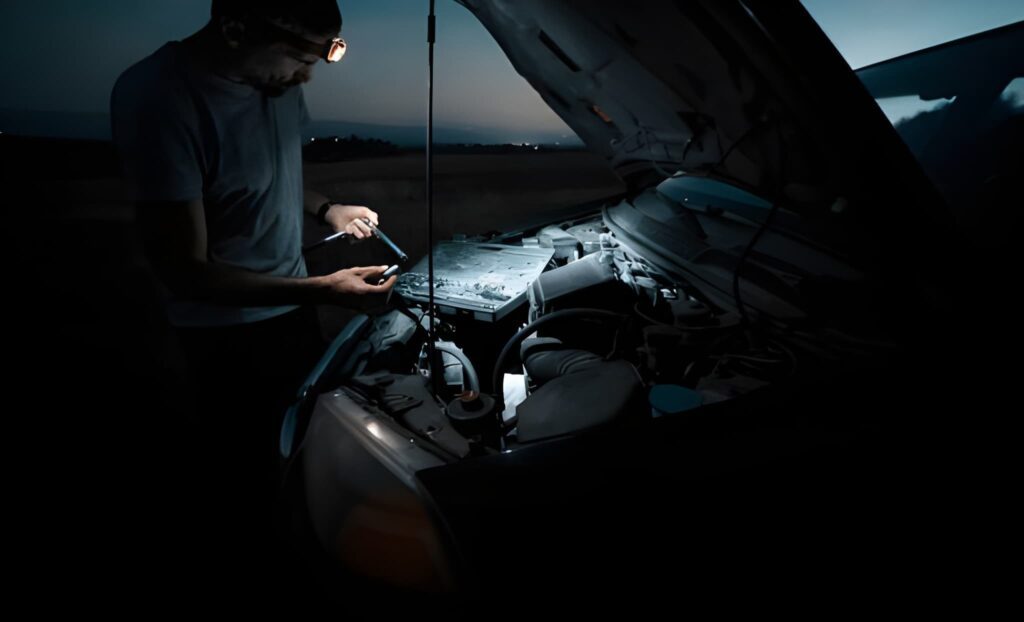
4. Flashlight or Torch
Breakdowns often happen at night or where lighting is bad. A flashlight can help you check your car, read warning signs, or get someone’s attention. Pick one with bright light and long-lasting batteries, or go for a USB-rechargeable type.
5. First Aid Kit
Small injuries might happen during a breakdown or accident. Keeping a small first aid kit with items like bandages antiseptic wipes, gloves, and simple medicines is crucial. Even minor wounds can turn into bigger problems without supplies while waiting for help.

6. Drinking Water
Getting stuck in hot weather in areas like Dubai or on long highways, can cause dehydration fast. Bottled water in the car keeps you hydrated if waiting for assistance or traffic delays take longer than expected.
7. Phone Charger or Power Bank
Your phone is the key to accessing recovery help, maps, and emergency numbers. Keeping a car charger or a power bank in the vehicle makes sure your phone stays charged even if the car battery is drained or the engine is off.
8. Gloves and Simple Tools
Work gloves shield your hands when checking the hood or handling a tyre. Having a basic tool kit with items like a wrench, screwdriver, and pliers can assist with small fixes or adjustments helping to improve safety.
9. Emergency Contact Details
Write down important phone numbers and save them too. In stressful situations or if your phone dies, having family contacts, recovery service numbers, and insurance details on paper can help.
10. Blanket or Reflective Safety Vest
A blanket keeps you warm on cold nights and offers comfort when waiting for help. Wearing a reflective safety vest makes sure others see you if you leave the car in low light or near traffic.
Why You Need an Emergency Kit
An emergency kit is not about solving every problem on your own. Its purpose is to keep you safe, focused, and ready while waiting for experts to assist. Rescue teams can do their jobs more when drivers stay noticeable, prepared, and shielded from danger. Having these tools can also stop panic and help you make smarter choices in tough roadside moments.
Contents
- 0.1 1. Reflective Cones or Warning Triangle
- 0.2 2. Jumper Cables or Portable Jump Starter
- 0.3 3. Tyre Repair Kit or Spare Tyre
- 0.4 4. Flashlight or Torch
- 0.5 5. First Aid Kit
- 0.6 6. Drinking Water
- 0.7 7. Phone Charger or Power Bank
- 0.8 8. Gloves and Simple Tools
- 0.9 9. Emergency Contact Details
- 0.10 10. Blanket or Reflective Safety Vest
- 1 Why You Need an Emergency Kit
- 2 Frequently Asked Questions
- 3 What is a car emergency kit?
- 4 Is an emergency kit useful if I already have recovery service?
- 5 Do I need different items for city and highway driving?
- 6 Should I keep an emergency kit even for short drives?
- 7 How often should I check my car emergency kit?